
Part of the Geospatial Growth Series
A full diary can make a survey business look healthy while quietly wrecking its margin, exhausting its team and blocking better work. The real growth question is not simply, “Where will our next ten jobs come from?” It is, “Do we actually want those ten jobs?”
That is the hidden cost of saying yes to everything: eventually, the business becomes extremely busy delivering work it never should’ve accepted.
And before anyone thinks this is an article telling surveyors to become fussy divas who only leave the office for a glamorous laser-scanning project and a decent lunch, it isn’t.
Smaller, urgent or less exciting jobs can be valuable. The danger is taking them without understanding what they consume, what they return and what they prevent the business from doing next.
In surveying and geospatial services, capacity is not an endless bucket
Every project uses field time, processing time, equipment, travel, project management, client communication, revisions and the bit nobody remembers to price: the owner’s brain at 10:47 p.m.
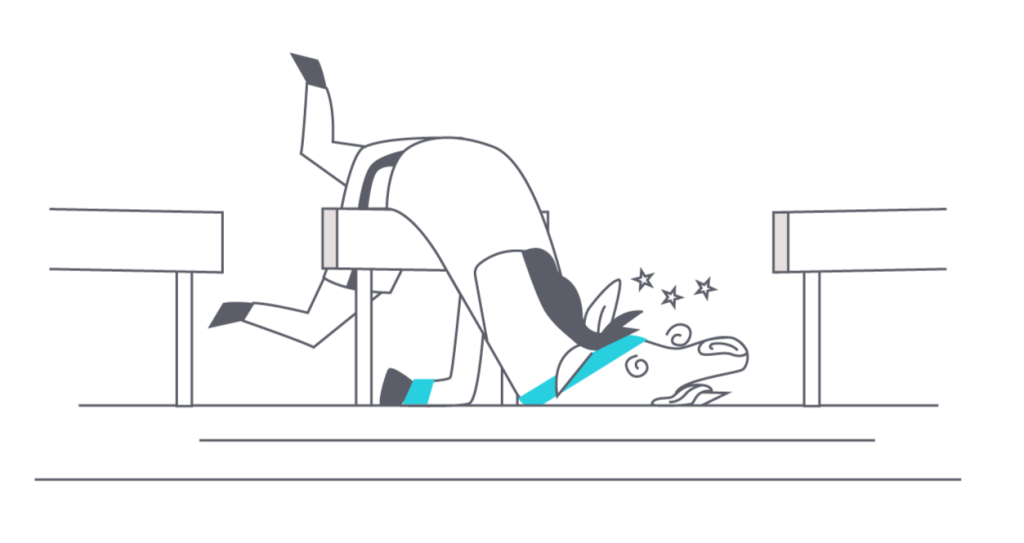
When all of that capacity is committed, a brilliant-fit client can arrive and hear, “We might be able to get to you in eight weeks.” Meanwhile, the team is still untangling an under-scoped job accepted because it was work and work felt safer than an empty pipeline.
That is not a workload problem. It is a commercial strategy problem wearing hi-vis.
Why busy can mislead
Revenue, workload and profit are not the same thing.
Professional-services benchmarks make this painfully clear.
The 2026 SPI benchmark, based on 509 organisations representing more than 245,000 employees and $63 billion in professional-services revenue, reported average project margins of 37.7% but average EBITDA (a financial metric that measures a company’s overall operational profitability by removing the costs of financing, taxes, and non-cash accounting adjustments) of only 9.9%.
In other words, plenty can disappear between delivering projects and what the business finally keeps.
Survey firms feel that gap in very practical ways:
- A quoted two-day site job becomes three because the access information was wrong
- The client adds “one tiny thing” to the deliverables, then another tiny thing, until the tiny things form a gang
- A low-fee job receives high-fee levels of communication and revision
- A project outside the firm’s normal specialism takes twice as long to process
- The survey is completed, but payment arrives late enough to develop its own personality
- The owner spends evenings fixing delivery problems instead of winning better future work
The Project Management Institute defines scope creep as uncontrolled expansion of project scope without corresponding adjustments to time, cost or resources.
It often starts innocently: a vague brief, an assumption left unchallenged or a helpful favour. But additional scope still has to be funded by somebody. If the client isn’t funding it, the survey company is.
A business can therefore be busy, billing and still underperforming. Activity is visible. Lost margin is sneaky.
Seven hidden costs
1. The margin you assumed
The first cost is the gap between the margin in the quotation and the margin after delivery.
A project worth £8,000 can sound better than one worth £4,000. But if the first requires repeated mobilisation, unplanned processing, senior intervention and three rounds of revisions, the smaller project may leave far more behind. Turnover is a vanity metric when the work required to earn it is ignored.
For each completed job, compare:
- Quoted hours against actual hours
- Planned site visits against actual visits
- Expected subcontractor and travel costs against actual costs
- Original deliverables against final deliverables
- Invoice date against payment date
- Gross margin against the target margin
No need for a dashboard that resembles air-traffic control. Start with the last 20 jobs. The pattern will become visible surprisingly quickly.
2. The better job you could not take
Every yes is also a no.
Yes to a poorly scoped, low-margin project may mean no to a repeat infrastructure client next month. Yes to an awkward one-off boundary dispute may mean no capacity for an engineering partner who could send work for five years. This is opportunity cost: the value of the best alternative the business gives up when it commits scarce capacity elsewhere.
The painful bit is that the rejected opportunity does not appear in the accounts. There is no line saying, “Great client lost because everyone was dealing with Dave’s seventeenth revision.” But the cost is still real.
This is why commercial capacity matters. As explored in our in-depth article That ‘Lucky’ Client Who Made You a Fortune? Here’s How to Find 10 More, the goal is not merely to attract work. It is to attract, win and retain the right work: profitable projects from clients the team is equipped to serve well.
3. Scope creep disguised as service
Surveyors are helpful. That is normally a strength. It becomes expensive when “being helpful” replaces change control.
PMI recommends a detailed written baseline, a clear process for assessing work outside the agreed scope and written documentation of the associated costs. In normal human language: write down what is included, what is not included, what the client must provide and what happens if the brief changes.
A good variation conversation does not need to be confrontational…
“Yes, we can add that. It sits outside the original scope, so I’ll confirm the effect on fee and programme before the team starts.”
That sentence protects the margin and the relationship. Quietly doing extra work, resenting it and then surprising the client later protects neither.
4. Cash-flow strain
A job is not commercially healthy just because the invoice has been raised.
UK government-backed research published in 2025 estimated that 1.5 million businesses were affected by late payments each year, with £26 billion owed at any one time. Affected businesses were owed £17,000 on average, while those spending staff time chasing late invoices lost an average of 86 hours a year. Separate Department for Business and Trade research found smaller firms have less bargaining power and often avoid formal action because they fear damaging an important customer relationship.
That is especially relevant to survey firms sitting several layers down a construction, infrastructure or development supply chain. The team may have paid wages, fuel, accommodation, software, equipment and subcontractors long before the client pays the invoice.
So client quality must include payment behaviour, not just project value.
Ask:
- Does this client accept reasonable payment terms?
- Do they issue purchase orders promptly?
- Do invoices regularly get “lost” in a system?
- Is there a history of disputes after delivery?
- Does the likely cash timing fit the firm’s commitments?
Revenue that arrives too late can create a very expensive job of financing somebody else’s business.
5. Team overload
The wrong work rarely stays confined to a spreadsheet. It lands on people.
Health and Safety Executive estimates that 964,000 workers in Great Britain experienced work-related stress, depression or anxiety in 2024/25. The CIPD’s 2025 Good Work Index found that 69% of people who said their workload was “far too much” also said work negatively affected their mental health, compared with 14% whose workload felt about right.
Those are economy-wide figures, not survey-sector figures, so they should not be presented as a diagnosis of every geospatial team. They do show, however, why permanently overloading capable people is not a harmless growth strategy.
When a survey firm says yes without checking capacity, the usual response is heroic effort. Another early start, another late drawing, another weekend spent processing data…
Heroics are useful in an emergency. If they are required every week, they are not heroics; they are the operating model.
And that model eventually charges interest through errors, rework, sickness, resentment or good people leaving.
6. Damage to reputation
Taking unsuitable work doesn’t just risk the margin. It risks trust.
A team working outside its sweet spot, under an unrealistic deadline and with unclear scope is more likely to communicate poorly or deliver late. The client rarely thinks, “To be fair, their capacity planning was optimistic.” They think, “That firm was difficult to work with.”
Saying no early can feel uncomfortable, but a professional no can build more trust than a chaotic yes.
“This is not the area where we can give you our best work within your programme. Here is what we can do, and here is somebody better suited to the part we cannot.”
That is commercial confidence, not lost business.
7. The owner becomes the bottleneck
This is the hidden cost that catches many technically excellent survey businesses.
The owner prices the work, answers the difficult questions, sorts the programme, reassures the client, reviews the deliverable, chases the invoice and steps in when anything wobbles. The company grows, but every road still leads back to one person.
The result is a full pipeline with no space to build the systems that would improve the pipeline. Marketing stops. Follow-up stops. Client development stops. Six weeks later, the diary looks less healthy and the business says yes to the next unsuitable job because uncertainty has returned.

That is the feast-and-famine loop. The fix is not “post more on LinkedIn” in isolation. It is to decide which clients and projects the business wants, build visibility around those problems and qualify enquiries before they consume estimating and delivery time.
As How Your Next Client Actually Decides to Hire You explains, not every enquiry deserves a proposal. The customer journey should help the right buyers qualify themselves while giving the firm enough information to qualify them too.
Build a job filter
This does not require an enormous committee or a laminated policy nobody reads. Use a simple scorecard before quoting substantial work.
Score each factor from 1 to 5:
| Category | 1 means | 5 means | Your score |
| Strategic fit | Outside the core offer | Exactly the work the firm wants more of | |
| Client fit | Poor communication or values mismatch | Trusted buyer with strong relationship potential | |
| Margin potential | Price pressure and unclear costs | Healthy fee with understood delivery cost | |
| Scope clarity | Vague brief and assumptions | Clear deliverables, inputs and exclusions | |
| Capacity fit | Creates overload or displaces priority work | Fits the programme and team capability | |
| Payment quality | Long, uncertain or disputed terms | Clear process and reliable payment history | |
| Repeat value | One-off with little wider value | Repeat, referral or sector-positioning potential |
The number is not a substitute for judgement. It makes judgement consistent.
A low-scoring project may still be worth taking for a deliberate reason: entering a target sector, helping a valued client or developing a team member. Fine. The key word is deliberate. “We said yes because it appeared” is not a strategy.
Use three outcomes:
- Yes: strong fit; price and programme it properly.
- Yes, if: proceed only if scope, fee, deadline, payment terms or responsibilities change.
- No, but: decline professionally and, where possible, refer the enquiry to somebody suitable.
“No, but” is useful in a close-knit profession. It protects the prospect, strengthens partnerships and may send the favour back later.
Find the real ideal client
The easiest ideal-client exercise is not imagining a fictional “Construction Manager Chris” and debating what coffee he drinks. Start with evidence.
Review the previous two or three years of work and identify the clients and projects that were:
- Most profitable
- Easiest to deliver well
- Fastest and most reliable to pay
- Most likely to repeat or refer
- Best aligned with the team’s expertise
- Most enjoyable to work with
Then look for common features: sector, company size, location, project type, decision-maker, trigger event, procurement route, problem and buying language. That becomes the basis of a useful buyer persona and a clearer commercial position.
Marketing enters the picture here, but not as the department making pretty posts. It is the system that helps the right people find the business, understand its value and arrive already recognising why it is suitable.
That has a direct operational benefit. Better positioning reduces irrelevant enquiries. Useful content answers questions before a call. Case studies show the type of work the firm wants. A clear website helps suitable buyers self-select. Consistent visibility means the pipeline is less dependent on accepting whatever happens to appear this week.
What changes with focus
GMA Ambassador Stewart Ward’s experience shows what can happen when a survey business moves from relying mainly on reputation and repeat clients to communicating its value consistently.
He says new clients now contact his business with a very different attitude: “You’re my guy… just take care of it.” Rather than automatically shopping on price, some arrive with trust already established. Stewart also reports that business revenue is probably around three times what it was when he started GMA, acknowledging that the increase cannot be attributed to GMA alone.
Authentic proof is not magic-wand nonsense. GMA did not perform the surveys, manage the team or create every market opportunity. It helped Stewart communicate more clearly, educate buyers consistently and bring what he learned back into the business. He describes the result as more calls, stronger trust and clients who are less focused on comparing the cheapest quotation.
Another GMA ambassador, Christopher Juliano, says his firm became more willing to say no to work that was not right for it. Six months into the programme, he reported being ahead year-on-year in both job numbers and revenue, again noting that the wider economy may also have contributed.
That is what good commercial focus looks like. It does not necessarily produce fewer jobs. It produces a better reason for taking them.

Start this Friday
Set aside 60 minutes and do this with the management team:
- List the last 20 completed jobs
- Mark each green, amber or red for margin, delivery experience and payment behaviour
- Identify what the green jobs have in common
- Identify the warning signs shared by the red jobs
- Write five qualification questions to ask before the next quotation
- Agree who has authority to say “yes, if” or “no, but.”
- Choose one type of profitable work the business wants to attract more consistently
Then make the external message match the internal decision.
If the firm wants river-survey work, stop making the website read as though every possible geospatial service is equally important. If engineering consultancies are the strongest buyers, create content for their problems. If a particular project type repeatedly produces good margin and repeat work, build case studies around it. If one sector causes endless scope disputes, tighten the proposal and qualification process before accepting another job.
The aim is not to become less helpful. It is to stop confusing helpfulness with agreeing to commercially damaging work.
Because saying yes to every job does not make a survey company customer-focused. Sometimes it simply makes the company tired, underpaid and unavailable when the right client finally calls.
Build a better pipeline
If this article has prompted the slightly uncomfortable thought, “We are absolutely doing this,” that is good news. A pattern you can see is a pattern you can change.
The Geospatial Marketing Academy 2.0 is a nine-phase guided programme created specifically for surveyors and geospatial businesses. It helps firms clarify their niche and positioning, improve visibility, create content that prompts action and build a repeatable lead-generation system in around three hours a week.
Not generic marketing waffle. Not dancing on TikTok beside the total station. A practical system for attracting better-fit clients and building more consistent demand, so the next project is chosen because it is right, not accepted because the pipeline is frighteningly quiet.
FAQs
Q: Is it bad for a surveying company to accept every job?
A: It can be. Taking every job may fill the diary, but unsuitable work can reduce margin, create scope creep, overload the team and block capacity for more valuable clients. Use consistent qualification criteria rather than deciding from fear or workload alone.
Q: How can a survey business identify profitable jobs?
A: Compare quoted and actual hours, mobilisation, processing, revisions, subcontractor costs, payment timing and gross margin. Then identify the project and client characteristics shared by the strongest results.
Q: What should surveyors check before quoting?
A: Confirm the client’s real objective, site and access conditions, required deliverables, accuracy or specification, programme, client-supplied information, decision process, budget, payment terms and how changes will be approved.
Q: How can a surveying firm say no without losing the client?
A: Explain the constraint honestly, recommend a workable alternative and refer the client when appropriate. A useful format is “No to this scope or deadline, but yes if these conditions change.”
Q: What is scope creep in a survey project?
A: Scope creep is additional or changed work that is introduced without matching changes to time, fee or resources. Survey firms can reduce it with clear deliverables, assumptions, exclusions and a written variation process.
Q: How does marketing help a survey company win better work?
A: Focused marketing makes the firm visible to suitable buyers, explains its specialist value, answers buying questions and builds trust before an enquiry. That can improve lead quality and reduce reliance on price-led, last-minute opportunities.
Q: What is the Geospatial Marketing Academy?
A: GMA 2.0 is a guided programme for surveyors and geospatial businesses covering positioning, visibility, content, campaigns, lead generation and practical AI-supported workflows. It is designed as a repeatable system rather than a collection of disconnected marketing activities.